February 26, 2026 · 7 mins read
Santosh Kumar
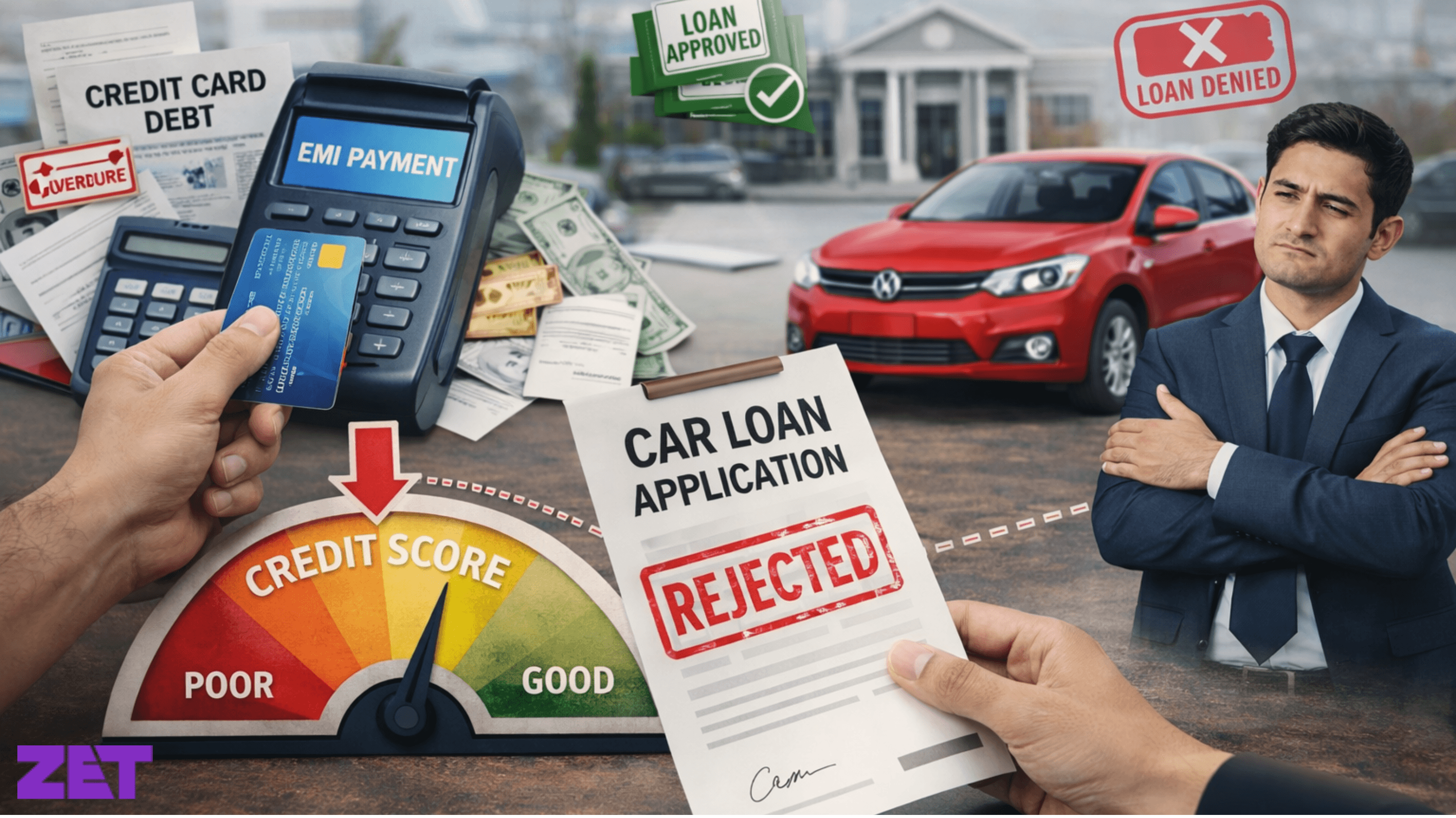
Purchasing a car is a thrilling rite of passage, but getting approved for a car loan is about more than just your salary. Lenders consider your current liabilities prior to sanctioning a loan, and one of the most neglected liabilities is credit card EMI. Most borrowers would convert their credit card purchases into convenient monthly installments, assuming it has a minor effect on future borrowing. But credit card EMIs can directly impacting your car loan eligibility, interest rate and approval chances.

Understanding how EMIs for credit cards can affect your credit report can help you make better financial decisions and increase your chances of getting better car loan terms.
EMIs on your credit card allow you to break down large purchases into smaller and manageable monthly payments. Instead of having to pay the total amount due right away, the total amount due is divided into fixed monthly payments for a certain period of time, and may include interest and any fees charged for processing or setup.
This option can be helpful for consumers when making larger purchases like electronics, booking vacations or paying for medical expenses. However, once you have committed to an EMI, it is the same as committing to any other loan. This commitment is factored into the lender's determination of your ability to repay the loan.

They figure that before they’ll approve a car loan, you can’t borrow money and not pay it back and there’s not going to be any strain. Several factors influence this evaluation.
Your salary and employment tenure are also good signs of repayment ability. They’ll also look at your credit score, existing loans, repayment history, and monthly obligations. A debt-to-income ratio, which measures your monthly liabilities in relation to your income, has a significant impact on your loan approval.
Credit card EMIs are on your monthly liabilities. So they play right into your loan qualifications by influencing how much extra debt you can handle.
Also Read: ₹2,000 FD Credit Card Limit: How Much Limit Can You Get?
DTI stands for debt-to-income ratio and it quantifies how much of your income is already committed to debt repayment. It allows lenders to see if you can easily handle another loan.
If you have existing credit card EMIs, your monthly commitment goes up. If a significant chunk of your income is already tied up in EMIs, lenders might view you as a riskier borrower. This can result in reduced loan qualification, increased interest rates, or even denial of your car loan request.
The lower the DTI, the better, it means you’re in better financial shape and more likely to get a car loan on good terms.
Also Read: How to Create a UPI QR Code for Your Shop or Business?
Credit card EMIs shrink your discretionary income since part of your monthly earnings is already earmarked for repayment. Lenders will subtract any existing obligations before determining your net available income.
If your credit card EMIs are high, lenders might lower the car loan eligibility amount. They’ll sometimes extend your loan tenure, or jack up your rate, to get a handle on perceived risk.
Lenders may be wary of approving new loans for borrowers who have several EMIs, particularly when the ability to repay looks minimal.
Also Read: What Is UPI 123Pay and How to Use It Without Internet?
Your other liabilities such as credit card EMIs impact the interest rate on your car loan. When lenders see multiple liabilities, they may charge you a higher rate because it’s more risky.
A borrower with little pre-existing debt and steady finances will qualify for better interest rates. On the flip side, hard EMI commitments translate into tougher loan covenants and increased interest rates.
Hence, by taming your credit card EMIs, you’ll be able to get a cheaper car loan.
Also Read: Documents Required for GST Registration for Different Business Types
Credit card EMIs don’t immediately rule you out for a car loan. It all depends on the size of the EMI, your income and financial profile.
If your income can easily take care of existing EMIs in addition to the proposed car loan instalment, lenders will pass the test. A good credit history, stable employment and a steady repayment track record can compensate for the EMIs you already have.
Nonetheless, too many or mismanaged EMIs add financial risk and can potentially lower approvals chances.
Also Read: Annual Fee vs Lifetime Free Cards
If you have credit card EMIs and are thinking of applying for a car loan, here’s what you can do.
Paying down balances prior to a loan application decreases your monthly obligations and thus lowers your debt-to-income ratio. EMI’s also help keep your credit score strong as long as you pay on time.
Avoid seeking new credit cards or loans near your car loan, as multiple credit enquiries can hurt your profile. Bumping up your down payment will also help cut the loan amount needed, and can increase your chances of being approved.
Having stable employment and consistent income makes your loan application even more solid.
Closing or prepaying credit card EMIs prior to applying for a car loan enhances your eligibility in most cases. Lowering your expenses means you have more ability to repay and a better debt picture.
But prepayment decisions come down to your finances. If shutting an EMI practically decimates your savings or emergency funds, it’s probably not a good idea. The trick is to balance debt reduction with financial stability.
Credit card EMIs are important for car loan eligibility, as they impact your monthly obligations, your credit score and your debt-to-income ratio. Although they do not directly block loan approval, EMIs in excess or managed poorly can hamper eligibility, hike interest rates and delay approval. By managing your credit well, having a good credit score, and not being overburdened with liabilities, you can increase the likelihood of obtaining a car loan with good terms. Prior to putting in for a car loan, check your financial obligations and shore up your credit.
According to the creditor, credit card EMIs will increase your monthly financial obligations, which then has an impact on your debt-to-income ratio. This may either give you some difficulty in getting approved for a car loan if you have high amounts of debt, or cause stricter loan terms when obtaining a car loan.
If your income is sufficient to pay for your existing EMIs, as well as the proposed new car loan payments (instalments), then yes you should be able to get approved (for both a car loan and an EMI). In addition, if you also have a good credit score and a stable overall financial picture, then that will help you get your car loan approved as well.
Making timely payments of all of your credit card EMIs not only helps increase your credit score, but also shows lenders that you have made responsible use of credit. This will lend further strength to your loan application, and provide lenders with more confidence in approving your loan application.
The number of credit card EMIs you are allowed to have that will not affect your eligibility for a car loan will depend on the total amount of EMIs that you currently have (existing) compared to the amount of income that you have available to pay your total obligations. Lenders primarily want to see that your total liabilities are manageable from a cash flow perspective.



Contact

care@zetapp.in
Social


Build and Maintain a 750+ Credit Score