February 26, 2026 · 7 mins read
Santosh Kumar

Buying a home is one of the biggest financial decisions in a person’s life, and your home loan interest rate has a huge impact on how affordable your dream property will be. In India, while lenders consider multiple aspects prior to sanctioning a housing loan, your credit score still reigns supreme. Your CIBIL score impacts the interest rate at the bank & financial institutions, the loan amount you qualify for and even the approval speed.

Knowing how home loan interest rates are tied to your credit profile can help you plan, negotiate good terms, and save big over the long haul.
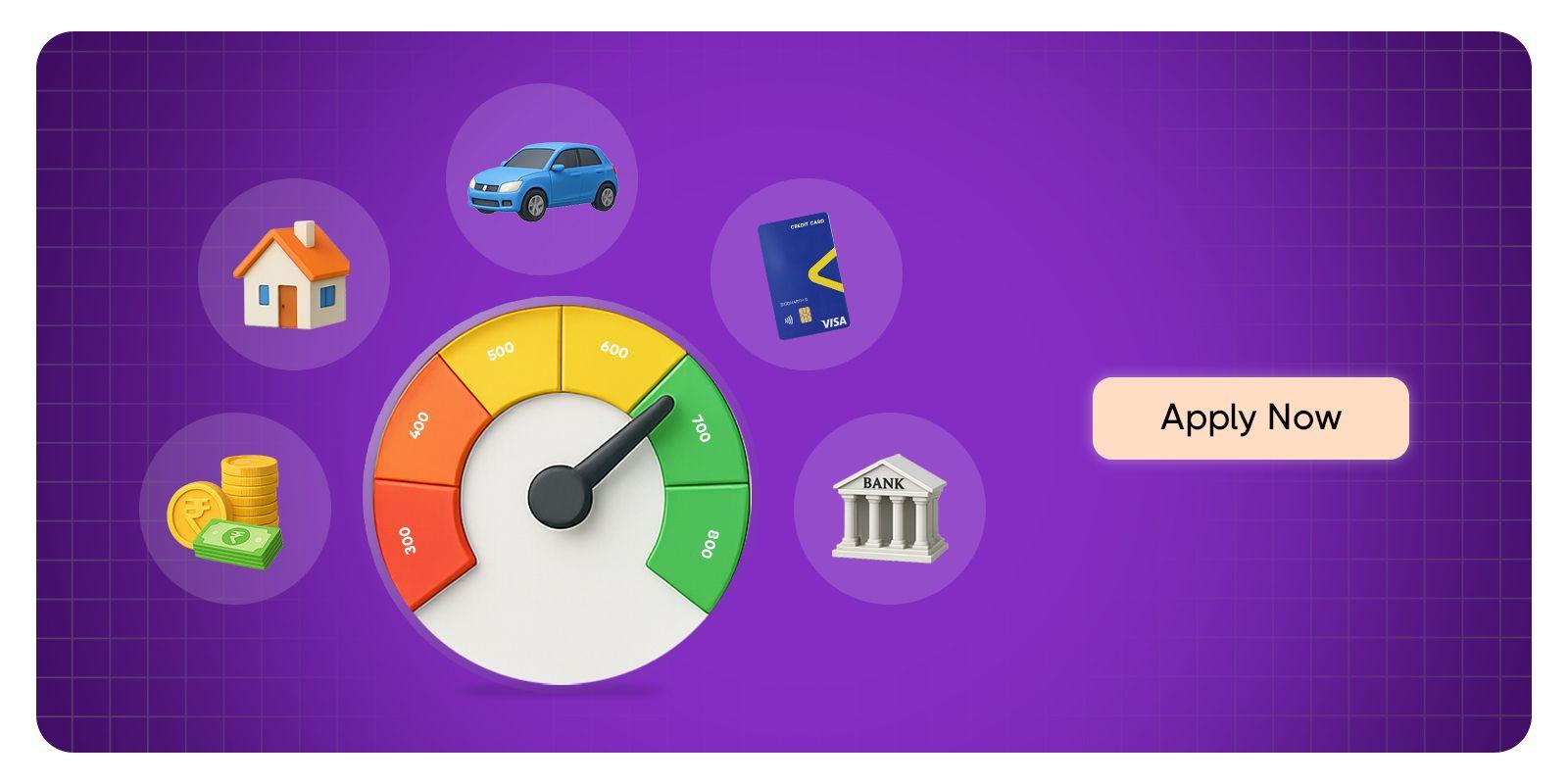
A CIBIL score is a three-digit number that reflects your creditworthiness based on your borrowing and repayment history. It’s provided by TransUnion CIBIL, one of India’s top credit bureaus. The score typically falls between 300 and 900 on a higher score suggests that you’re responsible credit behaviour and lower risk to lenders.
It looks at repayment history, credit utilisation, credit enquiries and types of credit accounts to calculate the score. Lenders use this score to determine if you will make your home loan payments on time.
Also Read: How to Apply for a ₹2,000 FD Credit Card on ZET App: A Step-by-Step Guide?
Home loans consist of high amounts and tenure up to 20 or 30 years. Due to this long-term commitment, lenders evaluate risk closely prior to setting the interest rate. A high CIBIL score indicates financial prudence and minimizes the perceived risk for lenders so they can afford to provide lower interest rates.

A lower score, conversely, hints at potential repayment problems, late payments, or over-indebtedness. To make up for this danger, lenders tend to levy higher interest rates or more severe loan terms.
Even a slight difference in interest rate can mean a big difference in how much you end up paying over the course of the loan. And hence, a good credit score can save you significant money.
Also Read: Credit Card Cash Advance
Different lenders have different eligibility criteria, but here’s typically how CIBIL score ranges affect home loan interest rates.
Above 750, borrowers are very good. They typically get the lowest interest rates available, faster approvals and larger amounts. Lenders could likewise provide flexible payment terms and light paperwork.
A mark in this range remains positive. Borrowers may obtain home loans at most competitive rates — though not necessarily the lowest. Approval chances are still favorable, if other finances are solid.
Also Read: How to raise your credit score by 200 points
For a so-so credit score, home loans are available but at elevated interest rates. Lenders might also impose harsher terms like lower loan to eligibility, or additional paperwork.
Lower than 650 means more credit risk. It’s hard to get approved for loans and if you do, the interest tends to be much higher. Certain lenders will want a co-applicant or collateral, to hedge their bets.
Also Read: Best Credit Cards for Shopping at Amazon & Flipkart
Banks implement risk-based pricing in setting home loan interest rates. This implies the interest rate varies based on the borrower’s risk profile, which is largely determined by their credit score.
A good score means there’s less risk they’ll default, so lenders can charge them a lower interest rate. On the other hand, a lower score is more risky and accordingly carries higher rates. Along with the credit score, lenders look at income stability, the type of job, debt-to-income ratio and property value.
Specifically, for instance, two people applying for the same loan amount may have different interest rates just by virtue of their credit scores.
Knowing what impacts your credit score allows you to control it. A few things help determine your score.
Your repayment history factors most heavily. Paying loan instalments and credit card bills on time boosts your score, missed payments drag it down. Credit utilisation also factors in. High utilization of your credit limit suggests financial stress and drives down your score.
Multiple credit applications hurt your score because they indicate credit hunger. A balanced mix of secured and unsecured credit and keeping old accounts active also helps.
Also Read: Top Credit Cards for International Travel in 2025
Nice credit scores don’t happen overnight, but a few months of financial discipline can make all the difference.
Begin by settling all existing dues on time. Paying down debt and trimming credit card use improves your credit utilisation ratio. Don’t go for several loans or credit cards in a short timeframe!)
In addition to informing you of your score, looking over your credit report regularly helps catch errors or discrepancies that could impact your score. Fixing those quickly can help your credit profile.
Having older credit accounts and income stability also bolsters your case with lenders.
While a low CIBIL score does make borrowing hard, it’s not impossible. Certain lenders will provide home loans to even lower scorers, but the terms are generally less favorable.
Borrowers can expect higher rates, or lower amounts, or tougher qualifications. Adding a co-applicant with a strong credit profile or a larger down payment can help your approval chances.
But it’s almost always better to beef up your credit score first, because then you’ll qualify for better terms and take on less financial stress.
Your CIBIL score is a deciding factor when it comes to home loan interest rates in India. It echoes your spending tendencies, payment rigor and credit usage habits. Not only does a higher score get you approved more often, it also gets you lower interest rates and better terms.
But before you even apply for a home loan, it’s worth reviewing your credit report, boosting your score and practicing financial discipline. This enables you to lower borrowing costs and reduce the affordability of home ownership.
Most banks require a minimum CIBIL score of 750 or higher to qualify for a home loan with competitive interest rates; however, there are some lenders that will accept lower scores but charge higher rates and/or fees.
Loan?
The higher the credit rating, the less the perceived credit risk associated with lending the money, as well as the likelihood that a person will repay their loan on time. This allows lenders to offer lower interest rates on loans to people with higher credit ratings because there is less chance of defaulting on the money lent.
There are many things you can do to increase your credit score; however, most of them take time to show improvement. The best way to start seeing quick improvements will be by making timely payments of your debts and reducing your outstanding balances, which over time will also help with your overall score. Then, once you show consistent financial discipline over a few months, this will positively affect your CIBIL score.
No, every bank/lender has their own internal policies that will determine the risk associated with lending money. Therefore, while the majority of lenders will provide borrowers with lower interest rates based on their credit score, the actual levels of interest rates will vary between banks/lenders.



Contact

care@zetapp.in
Social


Build and Maintain a 750+ Credit Score