December 26, 2025 · 11 mins read
Santosh Kumar
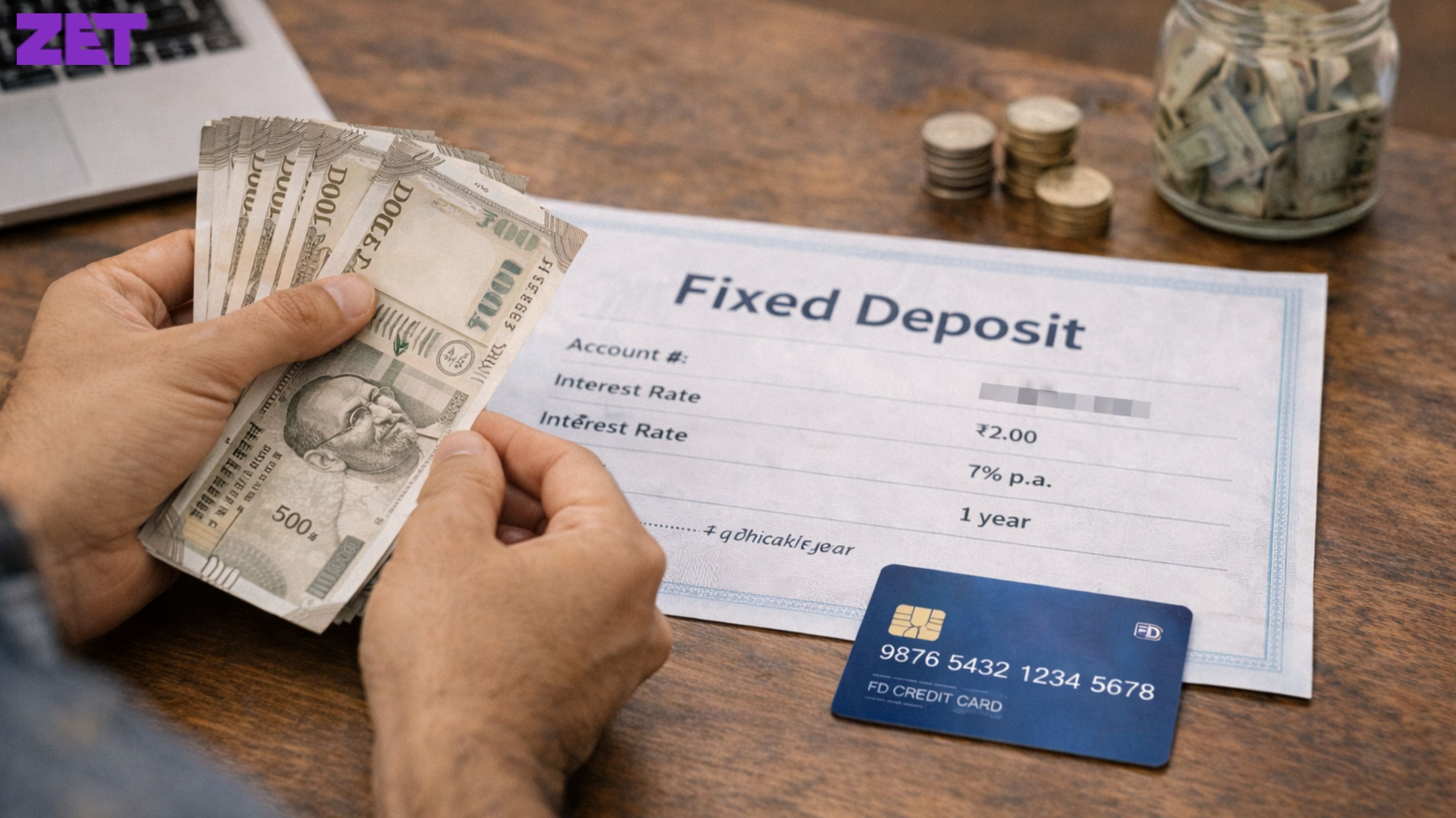
A ₹2,000 FD credit card frequently seems like the most secure path to enter the credit universe. You put down a modest amount, get sent a card, and begin establishing a credit history without having to fret about getting denied or providing income documentation. One question that quietly lurks in the back of most users’ minds is returns. If your dough is buried in a fixed deposit, what interest do you REALLY get to take away?

Understanding the interest on the 2000 FD credit card is important because it helps you evaluate the true cost and benefit of this arrangement. Whereas an FD-backed card’s raison d’etre is credit building, the FD continues to accrue interest behind the scenes.
On the face of it, interest on ₹2,000 appears negligible. But for novices, even modest returns reinforce a crucial monetary discipline. You discover that money works for you, even as collateral. FD-backed credit cards aim to pair two financial products. One helps you build credit, the other quietly accrues interest. The trick is knowing what to expect so you’re not let down or deceived.
When you open an FD to get a secured credit card, the FD is just like any other bank deposit, and the bank pays interest on it at the current fixed deposit rate for the selected tenure.
Neither does the credit card alter the way the FD earns interest. Regardless of the card use, the deposit earns interest until maturity. This answers a common doubt around how FD interest works on secured credit card arrangements.
The deposit is locked in, but still earning.
Also Read: How to Apply for a ₹2,000 FD Credit Card on ZET App: A Step-by-Step Guide?
Most banks in India are offering fixed deposit interest rates at anywhere between five to seven per cent per annum on small retail deposits. Senior citizens may get a tick higher, but for a plain ₹2,000 FD, the standard rate.
The specific interest rate varies by bank, term and market conditions. Shorter tenures typically get a bit less interest, while longer tenures perhaps get a little better.
Also Read: Can Students Get a ₹2,000 FD Credit Card? A Complete Guide
Let me illustrate the numbers with a simple example.
If your bank pays six per cent annually, a ₹2,000 fixed deposit would generate about ₹120 in one year before tax. If the tenure is shorter, say six months, then the interest earned would be approximately half of that.
This shows the realistic 2000 rupees FD interest benefits. Although not large, it’s steady and risk-free.
Also Read: How a ₹2,000 FD Credit Card Helps Build Your CIBIL Score Fast
No, credit card usage does not affect the interest on your FD. Whether you swipe it silly or leave it to collect dust, the FD interest keeps building up as promised.
This divide is worth noting. The card is just backed by the FD. It doesn’t change the deposit’s earning process.
Also Read: ₹2,000 FD Credit Card Limit: How Much Limit Can You Get?
If you shut down your FD-backed credit card prior to the deposit maturing, the FD is generally broken prematurely. When they do, banks penalise you a little bit by ding your interest.
This, of course, is a rule for fixed deposits and not credit cards. The curiosity is still accrued, but at a reduced rate.
Also Read: Best Credit Cards In India You Can Get On A ₹2,000 FD (2026 List)
Interest on fixed deposits is taxable according to your income tax slab. While the earnings on ₹2,000 are tiny, it’s still taxable.
And in most cases, the interest is too low to interest tax deduction at source. But it should nonetheless be reported if you file a tax return.
For the majority of early-stage founders, this tax effect is negligible and almost never an issue.
Also Read: How to Get a Credit Card with Just a ₹2,000 FD in India
From a purely financial perspective, the interest on ₹2,000 is somewhat insignificant. You’re not cracking open an FD-backed credit card to accrue interest.
The real treasure is in credit building. The interest is gravy, not the primary advantage. It makes up for the opportunity cost of tying your funds up, if only a little bit.
Also Read: How to Create a UPI QR Code for Your Shop or Business?
A fixed deposit typically yields a higher interest rate than a current savings account. If you left the same ₹2,000 in a savings account, the interest would be much lower.
This puts FD-backed cards slightly more productive than just sitting on idle cash, particularly for those looking to build credit at the same time.
Now, there’s a slight psychological benefit, as well. Being aware that your deposit is accumulating interest during responsible card usage reinforces good financial habits.
It transforms the mentality from thinking of the deposit as a sacrifice to thinking of it as a productive asset.
Also Read: How to solve ‘UPI ID Not Found’ error?
The ZET Credit Card ecosystem is built around simplifying credit for beginners. Though the FD itself is managed with partner banks, ZET helps members see how their money works under the hood.
For users beginning with a ₹2,000 FD card, ZET emphasises that the fixed deposit still earns interest on its own, irrespective of card utilisation. This transparency allows users to concentrate on cultivating credit, instead of fretting over surrendering gains.
By framing the FD as both a security and a savings instrument, ZET instils responsible financial habits right away.
Also Read: UPI vs Wallet Payments: Which One Should You Use?
Longer tenures might provide marginally better interest rates, but they add to the lock-in period as well. For first-time users, adaptability tends to beat slightly better returns.
A moderate tenure, however, lets you reevaluate your needs after you’ve earned some credit experience. Keep in mind that the deposit isn’t for profit, it’s for your credit path.
Yup, the higher your FD amount, the higher the interest. If you later top up your deposit to increase your credit limit, the interest earned also expands.
This makes FD-backed cards scalable. As your credit score strengthens, your credit limit and interest earnings grow.
Also Read: What Is UPI 123Pay and How to Use It Without Internet?
In determining if an FD-backed card is worth it, it certainly helps to weigh interest earnings against credit score gains. The interest earned might be tiny, but a high credit score can open up loans, superior cards and lower interest rates down the line.
From this point of view, the FD interest is simply a tiny bonus sprinkled on a huge long-term benefit.
Also Read: How to File NIL GST Return Online
Others think that the bank charges interest to pay for card fees. This is not true. Interest and card fees apply separately.
Others think that heavy card use depletes FD interest. Again, this is incorrect. The FD is not impacted unless you default hard and the bank repossesses the dues from it.
Also Read: GST For Home-Based Businesses: Do You Need It?
And as your income increases and you’re eligible for unsecured cards, FD interest won’t matter. At that point, you can shut down the FD-backed card and roll over the deposit.
But in the early years of your financial life, every little return makes a difference.
Absolutely. And while the rate is low, something is better than nothing. Pair that with credit building, and FD-backed cards are a viable option for newbies.
The trick is to create reasonable expectations and concentrate on the long-run value as opposed to the short-term gains.
Fixed deposits with an interest rate of five to seven per cent typically earn between ₹100 and ₹140 per year before taxes for a deposit amount of ₹2,000. The exact amount will vary based on the bank, the tenure selected by the depositor, and the prevailing rates of interest. However, the earnings may be small as they represent only a small portion of the deposit's value, they do provide a guaranteed, risk-free return, which is true for any fixed deposit.
Your credit card usage will not have an impact on the amount of interest being earned by your fixed deposit. Regardless of how frequently or how much time you use or spend to make payments, the principal amount of your FD will continue to earn interest separate from the payments being made on the credit card that is secured to the FD.
This will depend on the bank and the type of FD chosen by the depositor. Most smaller fixed deposits that are associated with credit cards will typically pay interest at maturity rather than monthly or quarterly. Some banks may also pay interest periodically, but on a ₹2,000 FD interest will generally be credited on either an annual or final maturity.
Yes, the income from fixed deposits is taxed according to your tax bracket. As such, the amount of tax deducted in the event of earning ₹2,000 in interest from fixed deposit is usually small, and almost never falls below the threshold for withholding tax. However, if you complete an income tax return, it must be reported as taxable income.
If you cancel your credit card before maturity of your fixed deposit, your bank will typically break the fixed deposit before it matures. The bank will impose a small penalty for early termination, which means you will earn a little less interest. Your principal amount and the interest earned at the adjusted rate are returned to you.
The FD-backed credit cards offered by ZET will have an interest rate based solely on the bank that issues the fixed deposit. ZET does not have the authority to set or increase interest rates for fixed deposits, but does provide clear and transparent information to its users about the interest rates that the respective banks offer.
The main purpose of having an FD credit card is to help develop your credit history. This is particularly important for someone who has never used a credit card or for individuals who do not have sufficient documentation to show income. Although the FD does provide interest on the funds that you deposit into the account, this is considered a secondary benefit and is not as significant compared to developing your credit's history.



Contact

care@zetapp.in
Social


Build and Maintain a 750+ Credit Score