January 22, 2026 · 4 mins read
Santosh Kumar
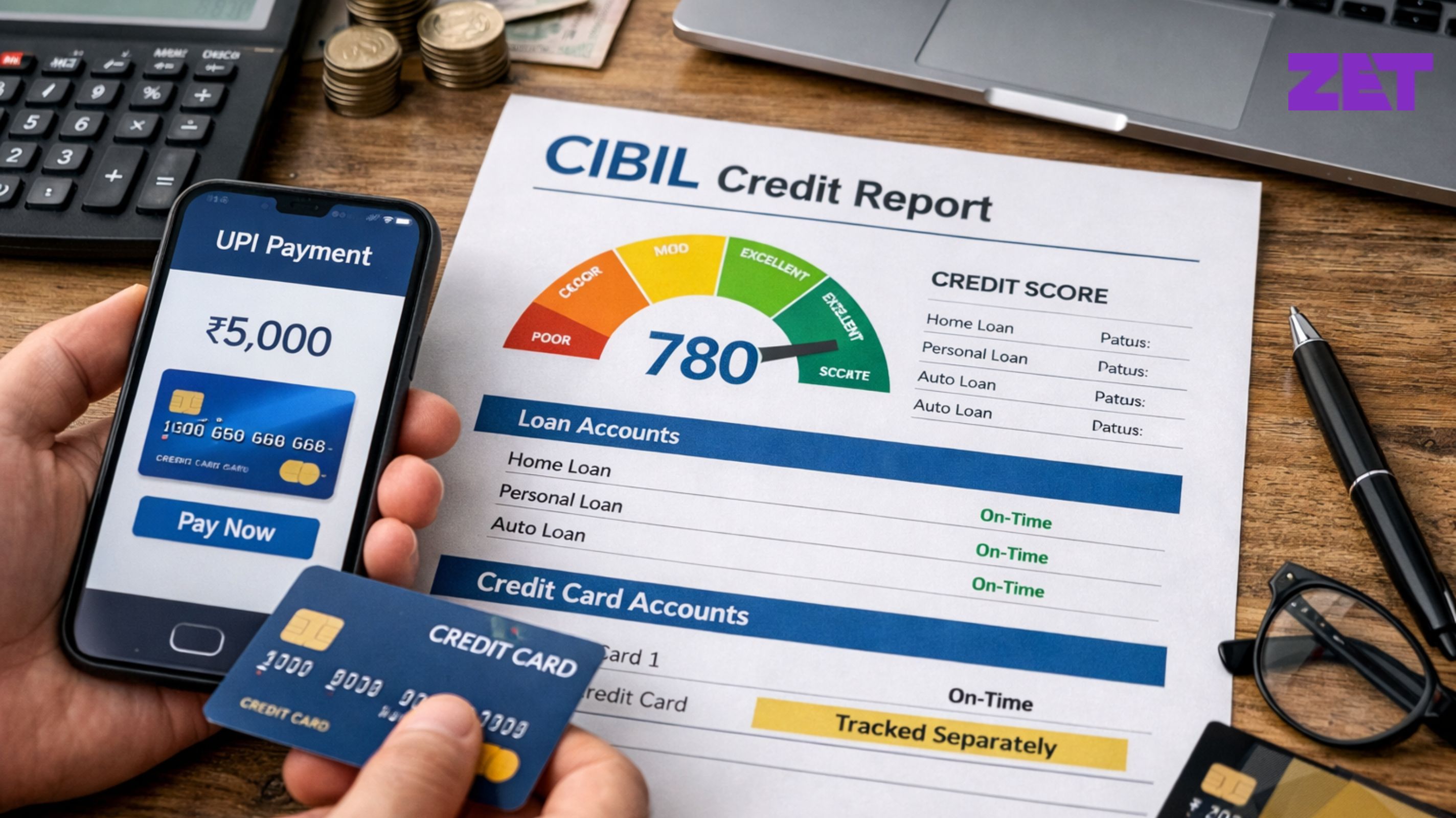
Credit bureaus like CIBIL don’t distinguish UPI credit card transactions from regular credit card transactions on their reports. All transactions made with a credit card for either a traditional card swipe, online purchase, or online purchase via UPI are classified in CIBIL reports under the category of card usage, and they do not display as separate transactions in your report. Therefore, UPI credit card transactions do not appear in your credit report as a transaction type.

CIBIL only tracks a borrower’s/general credit score; they do not differentiate between various payment modes. So, when it comes to UPI credit card transactions, all that matters is the total amount of available credit (your credit limit) that a borrower has used or not used, and whether they make timely repayments of their monthly statement balances on time, and if any payments are in bad standing. When UPI credit card transactions are included in CIBIL reports, they merely increase a borrower’s card balance. In short, a higher balance means a higher percentage of utilised credit, and timely payments will bolster the repayment history. Conversely, overdue payments will reduce the borrower’s repayment record.
Many people think their UPI transactions will be treated differently among banks because it appears similar to a bank transfer. However, the backend is treated the same as a card transaction, which is why you won't see separate items in your CIBIL report for UPI and card transactions – they are all consolidated in your credit card account.
While the consolidation of UPI with all your card activity on one report has advantages and disadvantages, you will find it helpful for easy reporting and confusing because you cannot clearly determine how much of your card activity occurred through UPI compared to your other methods. If you want detailed information, you need to look at your card statement and your UPI app rather than your credit report.
Also Read: ₹2,000 FD Credit Card Limit: How Much Limit Can You Get?
Concerning loan approval and credit scores, it doesn't matter how you classify your transactions; lenders only care about your transactional patterns. Lenders will review your credit dependence and repayment behaviour as well as the stability of your overall usage, not whether the transaction was completed through UPI or through a card-reader device.
To improve your management of credit, you can achieve this by regularly monitoring your Credit Report to ensure you maintain an acceptable level of Credit Utilisation. In order to protect your ability to make interest-free purchases and maintain a Healthy Profile, make sure you pay in full (no partial payments allowed) before the payment due date. Furthermore, if you utilise UPI payment methods via Credit Cards regularly, remember that these payments are not cash purchases and therefore the money borrowed from the lender is considered 'borrowed' (it is NOT an immediate debit to your account).
Also Read: Best Credit Cards In India You Can Get On A ₹2,000 FD (2026 List)
A few platforms have sought to clarify these relationships for consumers by providing tools that allow individuals to see how different forms of Credit (e.g., credit cards, personal loans) will impact their overall financial position. Therefore, ZETAPP provides an easy way for consumers to track Balances, Repayment Schedules and Credit Limits.
Also Read: How to Create a UPI QR Code for Your Shop or Business?
No, any UPI Credit Card Payments will be recorded as all other Credit Card Transactions that belong to that account.
No, there is no difference; the same way that any type of Credit Card Transactions affect your Credit Score, UPI transactions will have the same Impact.
No. A Lender will only Have Access to Total Credit Card Usage and Payments Made by You for Your Account.
The Tracking of UPI Credit Card Payments Can be Done Through Your Bank Statement and Your UPI App Transaction History.



Contact

care@zetapp.in
Social


Build and Maintain a 750+ Credit Score