February 25, 2026 · 8 mins read
Santosh Kumar
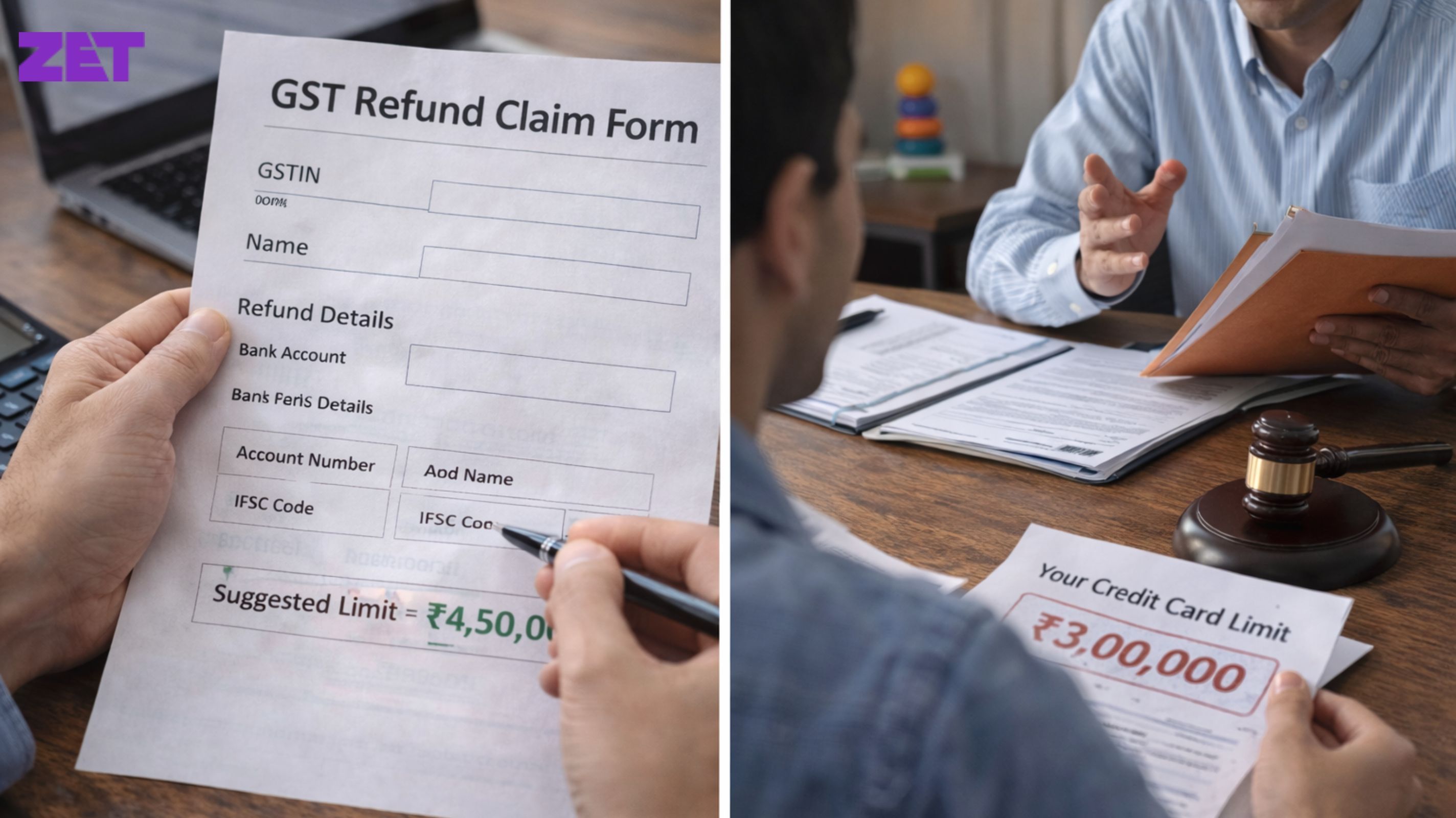
Under the GST regime, registered taxpayers can claim refunds when excess tax is paid or input tax credit is unutilised. GST refunds are crucial in keeping businesses’ cash flow healthy, especially exporters and those with an inverted duty structure. Knowing how refunds are processed, what kinds of refunds exist and how long they take allows filers to sidestep red tape and easily navigate tax time.

India’s GST refund framework follows rules and procedures devised by the Goods and Services Tax Council, intending to ensure transparency, efficiency, and ease of doing business. Taxpayers have to fil certain procedures and provide documentation to actually claim refunds.
A GST refund is the amount refunded by the tax authorities to a taxpayer when he has paid excess tax or has accumulated input tax credit or is eligible for refund under special circumstances. Refunds can be generated by overpaid tax, exports, tax paid on advances for cancelled deals or wrong tax payments. Through the GST system, the taxpayers can claim refunds so that tax is imposed only on the value of actual consumption. This avoids the tax on tax phenomenon and is equitable taxation.
GST refunds are credited directly to the taxpayer’s bank account post verification and approval by tax authorities.
Also Read: How to Transfer Money From Phonepe Wallet to Bank Account
GST law defines multiple kinds of refunds based on the kind of transaction and tax payment. Knowing these types helps taxpayers figure out if they qualify.
Taxpayers might also pay excess tax because of calculation errors or incorrect reporting or duplication. In such instances, the balance may be claimed as a refund on GST portal after verification.
Also Read: Which Credit Card Offers Fuel Cashback in India?
Unutilised input tax credit is caused when input tax paid on purchases is greater than the tax liability on outward supplies. This typically happens in export outfits, or in situations of reverse duty structures where the tax rate on inputs exceed the tax rate on output supplies.
Exporters can also claim refunds of unutilised input tax credit thereby preventing blockage of working capital.
Exports are zero-rated supplies under GST. That is, exporters can claim a refund of GST paid on inputs consumed in the production of exported goods or services or can claim a refund of integrated tax paid on exports. This provision is pro trade by exempting exported goods from the VAT.
Also Read: What is Virtual Credit Cards & Physical Cards
In cases where taxpayers pay GST on an advance for a transaction which is subsequently cancelled or not completed, the tax paid on such advances is claimable as a refund.
At times, taxpayers may erroneously pay CGST and SGST instead of IGST or vice versa. In those cases, the erroneously paid tax may be refunded once the correct tax is paid.
GST law also offers refund provisions for some specialised instances, such as supplies to foreign tourists or specific notified persons, under prescribed conditions.
The GST refund, however, can only be claimed if certain conditions are met. In order to claim a GST refund, taxpayers have to meet some requirements. They should be GST registered and filed all GST returns. The refund claim must be accompanied by a valid invoice, proof of tax payment and declarations.
Claims for refunds shall be filed within two years from the date. The applicable date varies according to the nature of refund being sought, e.g. date of export, date of tax payment, date of cancellation of transaction.
If you don’t qualify, your claim will be rejected or will be delayed.
Also Read: Best Credit Cards for Shopping at Amazon & Flipkart
GST refund process involves filing of application, verification by tax authorities and approval of refund amount. All this is carried out online via the GST portal.
Taxpayer is required to file refund application in specified form via GST portal. The claim must contain information of the refund amount, cause of the claim and any evidence.
Upon submission, an acknowledgement is generated that the refund application has been filed.
Also Read: Is BHIM UPI and Google Pay the Same
Such work papers may be invoices, export details, bank statements, tax challan’s, declarations, etc. They need different documents for different types of refunds.
Having sufficient timely and accurate documentation assists in avoiding processing delays.
Tax officials check the refund request and corroborating documents to validate the claim. They will ask for information or clarification as needed. If the claim is valid, refund is granted. Sometimes, a temporary refund is provided prior to final confirmation, especially for exporters.
Also Read: How to Increase CIBIL Score from 650 to 750
As soon as the refund is sanctioned, the sanctioned amount is credited to the taxpayer’s registered bank account. If the application is denied or partly approved, the taxpayer is notified of the reasons.
The exact documents you need to provide for your GST refund depends on the type of refund you’re claiming. Typically they’d require tax invoices, tax payment proofs, bank details and declarations.
For export refunds, shipping bills, export invoices and forex realization certificates may also be necessary. Filling out forms correctly guarantees a speedier processing and lowers the probability of denial.
Also Read: Can We Invest Monthly In FD?
GST law mandates such timelines for processing refund applications such that they are paid out on time.
In most instances, tax agencies must consider refund claims within 60 days from receiving the entire application. If the refund is not paid within this period, interest can be payable to the taxpayer on the delayed sum.
For some types - like export refunds - provisional refunds can be issued more quickly, with conditions. The rest is after extensive checking.
Your application will be delayed if it has errors, missing documents, or discrepancies in reported information.
Provisional refunds are paid to eligible taxpayers, mainly exporters, to maintain liquidity and prevent funds from getting blocked. Much of the asserted refund can be provided on an interim basis, prior to final validation. It powers companies engaged in global commerce with quick access to working capital.
GST refunds are a core part of the GST mechanism to ensure equitable tax and avoid undue tax burden on businesses and individuals. A refund can occur on account of excess tax payment, unutilised input tax credit, exports or on account of an incorrect tax payment. By knowing the types of GST refund, eligibility criteria, application process, and timelines, taxpayers can seek refunds efficiently.
And by keeping good records, filing timely returns and filing complete documentation, taxpayers can sidestep refund delays. Understanding GST refund processes promotes compliance and financial health.
GST refund claimable (who) Registered taxpayers who are owed refunds because they have overpaid taxes, have accumulated input GST credits that have not yet been deducted, or fulfill the criteria in the GST refund legislation can make a claim for a GST refund if they meet the requirements.
Time limit (for claiming GST refund) The usual time period to file a claim for a refund will be for Claims made related to recent GST transactions will usually be filed within two years from each respective transaction date will be filed.
Processing time (from application to receipt) GST refund applications are usually processed by the relevant Auditor and/or Tax Officer between 30-60 days after the respective application is submitted; however, if verification is required, additional processing may delay the anticipated receipt of the refund.
Refund rejection (through auditor/tax officer) GST refunds may be denied if the information included in the applicant's application is incorrect, if there are any errors or missing information in the supporting documentation submitted with the application, and/or if the applicant does not meet the eligibility requirements.
Interest on delayed GST refund (paid or not paid) Interest will be payable to the taxpayer after the respective tax refund due to the applicant, and if no tax refund has been issued to the applicant, then interest should also be paid on tax refund due to the applicant following the respective time frame established by the Income Tax Act.



Contact

care@zetapp.in
Social


Build and Maintain a 750+ Credit Score