February 25, 2026 · 8 mins read
Santosh Kumar
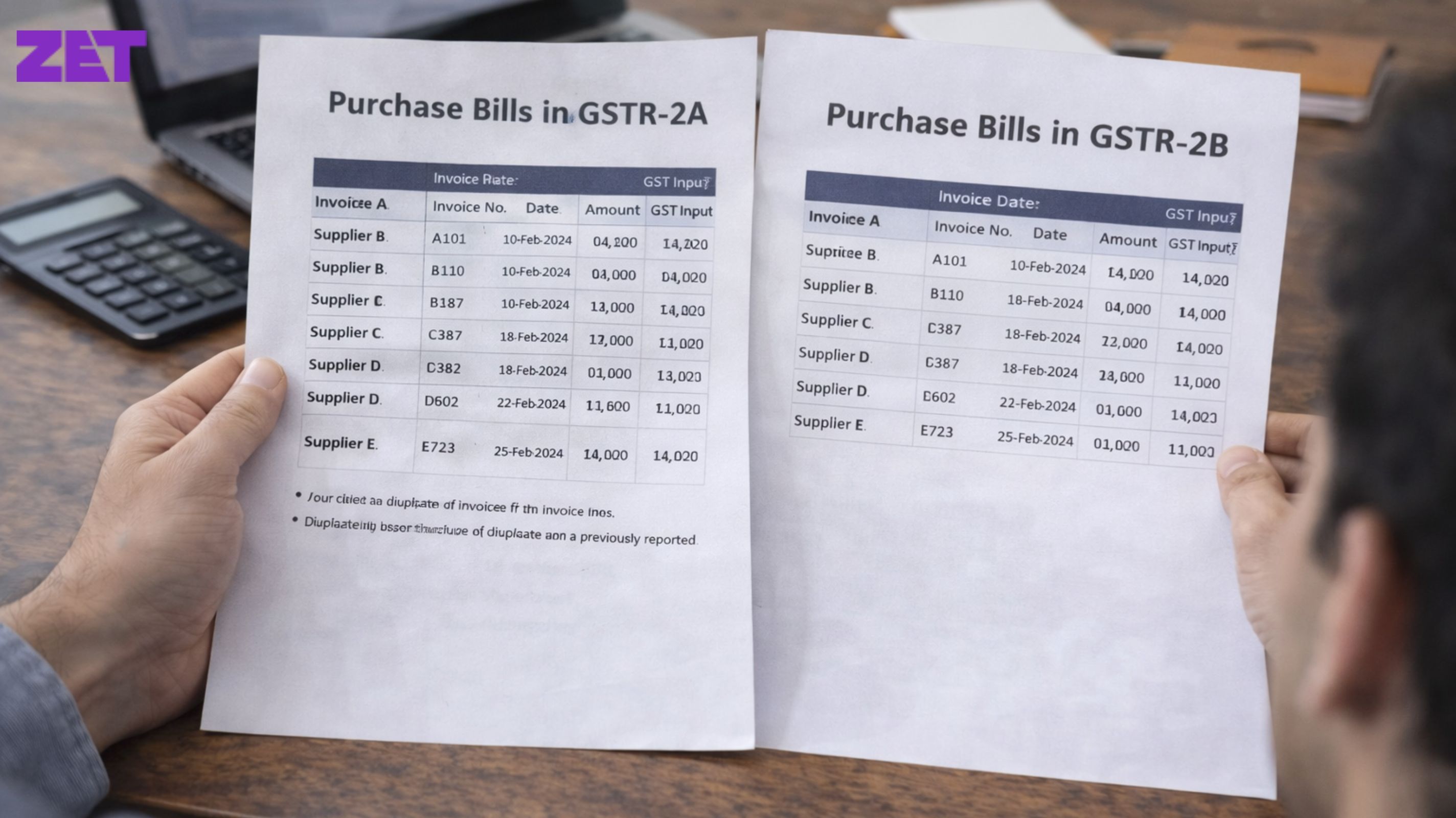
For GST in India, companies need to match their purchases with information on the GST portal to claim ITC. Two vital auto-populated details that assist taxpayers checking their purchase invoices are GSTR-2A and GSTR-2B. Although both detail inward supplies and assist in ITC reconciliation, they differ considerably in their generation, nature, usage, and tax compliance implications. What is the difference between bill of purchase reflected in GSTR-2A and GSTR-2B?

GSTR-2A is a live, auto-populated purchase statement on the basis of supplier filed returns. As soon as a supplier uploads or updates invoice information in their GSTR-1 or via IFF, it is automatically reflected in the recipient’s GSTR-2A. This implies the information in GSTR-2A is dynamic as suppliers continue to update, rectify or upload invoices.
Purchase bills in GSTR-2A captures information like invoice number, supplier GSTIN, taxable value, tax amount and date of supply. As it’s a live document, it assists firms track whether their vendors have filed invoices and remitted taxes as well. However, since it is refreshed throughout, GSTR-2A cannot be utilized as a concluding document for claiming Input Tax Credit for any tax period.
Also Read: What Is UPI 123Pay and How to Use It Without Internet?
GSTR-2B is a static auto-drafted statement rolled out by the GST eco-system to offer a fixed view of eligible/ ineligible ITC for a given tax period. Unlike GSTR-2A, the information in GSTR-2B remains static after its creation.
Prepared monthly and with details of purchase bills uploaded by suppliers in a given period.
GSTR-2B purchase bills consist of details about inward supplies, credit notes, and ITC (Input Tax Credit) eligibility. The statement also divides ITC between eligible and ineligible, helping taxpayers identify how much credit they can claim in their GST returns. And since it’s static, GSTR-2B is reliable for ITC calculation and return filing.
Also Read: Documents Required for GST Registration for Different Business Types
The main distinction between purchase bills in GSTR-2A and GSTR-2B is that GSTR-2A is dynamic — your purchase data keeps changing whenever suppliers file updated returns. If a supplier uploads an invoice late or fixes details, those changes will automatically show up in GSTR-2A.
GSTR-2B also creates a static view of a company’s purchase invoices for a certain period. It creates the data once, but it will stay static even if there are supplier changes to the purchase invoices after the GSTR-2B is created. This provides business with a consistent body of information they can use to file taxes.
Also Read: Annual Fee vs Lifetime Free Cards
Another key distinction has to do with the timing of data running from all the GSTR-2’s versus the timing of data from GSTR-2B invoices. GSTR-2A tracks invoices on a rolling basis as a supplier files invoices, so as suppliers file invoices, they will be immediately reflected in the report. This can create confusion for companies determining which invoices are being reflected within their tax returns due to the live timeline.
On the contrary, GSTR-2B provides a cut-off date for invoices allowed for the tax period that covers the 10th of the month through the 9th of the following month, so only the invoices that were approved for that time period by the supplier will be included in GSTR-2B. This creates an element of transparency about which invoices can be used for Input Tax Credit for that time period.
Also Read: Types of GST Registration in India
The GSTR-2A shows what a business purchased, but does not indicate whether or not it can use the Input Tax Credit (ITC). Therefore, the businesses must manually assess all of their purchases from GSTR 2A and determine if they can use the ITC on those expenses as per the GST rules.
The GSTR-2B adds additional clarity by identifying whether the ITC is eligible for claim, ineligible for claim, and/or eligible for reversal. By classifying the ITC, GSTR 2B reduces the likelihood of errors made by the taxpayer and increases the amount of ITC that can be claimed.
While both GSTR-2A and 2B are used in reconciliation, they are used for different purposes. GSTR-2A helps track if suppliers have uploaded invoices and also monitor purchase data changes. It also enables companies to proactively follow up with vendors in the event of missing invoices.
GSTR-2B is primarily for final reconciliation and return filing. And since the data is fixed and structured, it allows companies to reconcile their purchase records and prevent ITC claims in excess of that amount. Leveraging GSTR-2B for reconciliation increases compliance and mitigates the likelihood of notices from tax authorities.
Also Read: Can We Invest Monthly In FD?
The variance in purchase bills in GSTR-2A and GSTR-2B also impact businesses. GSTR-2A encourages continuous vendor management and allows companies to assess supplier dependability. Mismatch in GSTR-2A frequently indicates non-compliance on the part of suppliers.
GSTR-2B aids accounting and tax reporting. Because it offers a transparent view into qualifying credit, businesses can predict tax obligations more precisely and keep healthier cash flow.
Businesses need to reconcile both GSTR-2A and GSTR-2B on a monthly basis. Tracking GSTR-2A highlights missing or false invoices, and auditing GSTR-2B confirms that ITC claims are supported by consistent information. Periodic reconciliation of purchase bills with accounting records adds an element of transparency and reinforces compliance.
While both are important, GSTR-2B is typically more dependable for claiming ITC because it’s static and categorised ITC clearly, whereas GSTR-2A is still useful for tracking supplier behaviour and discrepancies, but it shouldn’t be used exclusively for final tax claims.
GSTR-2A and 2B are crucial GST compliance tools when it comes to checking your purchase bills and tracking ITC claims. Whereas GSTR-2A gives you a live snapshot into your purchase details and supplier behavior, GSTR-2B presents a static, dependable document for tax and reconciliation. By understanding the distinctions between these statements, businesses can sidestep mistakes, enhance compliance, and keep their financial books in check. If taxpayers utilize both documents efficiently, they can guarantee accurate ITC claims and hassle-free GST return filing.
The difference lies primarily in GSTR-2A being a constantly changing document, as it changes based on any uploaded/modified details by the recipients of invoices. In contrast, GSTR-2B is a fixed document established for each particular GST tax period, functioning as a permanent record of invoices within that time period.
People can refer/use GSTR-2A as guidance and to reconcile accounts, however, GSTR-2B is typically the preferred basis when claiming Input Tax Credits, as GSTR-2B provides a much clearer, stable, and categorised view of your eligible input tax credits.
GSTR-2A is updated depending on whether the suppliers upload their purchase invoices, whereas GSTR-2B is created each month and will not change after it has been uploaded for that particular GST time period.
You consider GSTR-2B to be a more reliable source because it gives a permanent snapshot (fixed date/time) of your Purchase (sales) invoices along with being able to differentiate between Eligible and Ineligible Use of Input Tax Credits leading to a lower risk of errors occurring.
Contact your supplier and ask them to upload their invoices into your GSTR 2-B as a priority. If you keep following up with them, it will help you file properly and claim ITC properly with the government.
Not necessarily, but it is highly recommended to perform a reconciliation with the two forms to ensure that your ITC claims have been filed correctly in compliance with GST laws and regulations.



Contact

care@zetapp.in
Social


Build and Maintain a 750+ Credit Score